
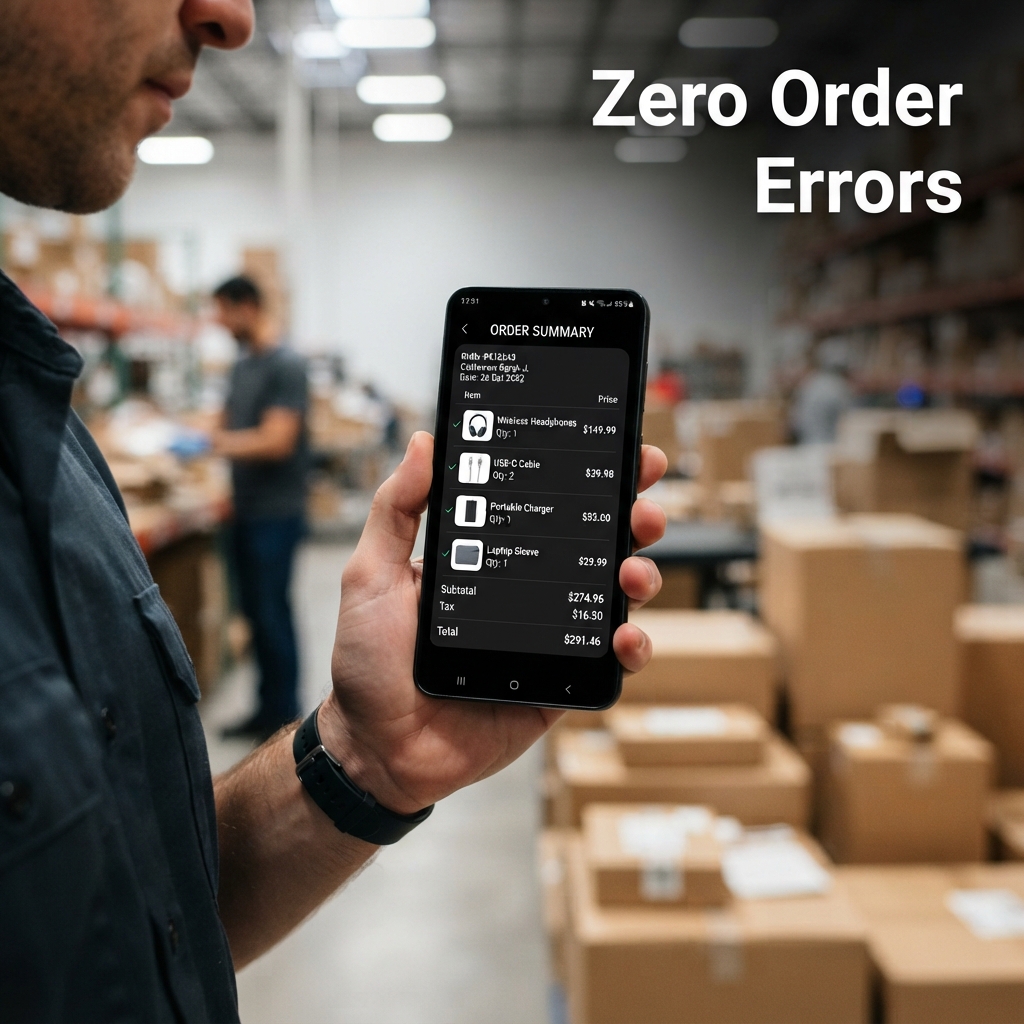
To handle Banglish chat orders without errors, you must implement a structured verification loop that converts phonetic Romanized Bangla into a standardized order format before final confirmation. This process prevents costly mistakes in shipping addresses and product variants by forcing a transition from messy chat language to a clean, structured summary.
The Banglish translation gap
Banglish is not a formal language; it is a phonetic shorthand. One customer might write "Ekta lal shirt lagbe" while another writes "1ta red shirt diben." When a human agent or a basic bot reads these, the risk of misinterpretation is high. The error usually happens during the transcription phase—when the agent moves the order from the chat window to a delivery sheet.
Because Banglish lacks standardized spelling, a "blue" item might be written as "nil," "neel," or "blu." If the agent guesses the meaning without verification, the wrong product is shipped. To eliminate these errors, you must stop treating the chat as the final record and instead treat it as a raw data source that requires cleaning.
Standardize the order intake process
Eliminating errors requires a consistent flow. Follow these steps to move from a chaotic chat to a confirmed order:
- Extract key entities: Identify the product, quantity, color, and size. If the customer says "2ta boro size," immediately translate "boro" to the specific size (e.g., XL) used in your inventory.
- Map phonetic terms to SKU names: Create a internal glossary. For example, map "lal" to "Red" and "shada" to "White." This ensures that regardless of how the customer spells it, the order enters your system using your actual product names.
- Isolate the delivery address: Banglish addresses are notoriously difficult. Separate the area, landmark, and phone number into distinct fields. Never copy-paste a paragraph of text as the address.
- Trigger a structured confirmation: Send a final summary in clear, formal language. This is the most critical step. The customer must see exactly what they are buying in a structured list before the order is marked as confirmed.
The critical verification loop
The single most impactful lever in reducing order errors is the structured confirmation message. You cannot rely on the customer’s "ok" to a vague conversation. Instead, provide a formatted summary that looks like a receipt.
Instead of asking "Everything correct?", send a message like this:
Item: Red Cotton Shirt (Size: XL) – 1 unit
Price: 1200 BDT
Delivery: Dhaka, Banani, Road 11
Phone: 017XXXXXXXX
By presenting the data in this format, the customer is forced to scan for errors. If they wrote "lal" and you listed "Red," they will confirm it. If you accidentally listed "Blue," they will correct it immediately. This loop shifts the burden of accuracy from the agent’s memory to the customer’s visual verification.
Managing address ambiguity in Romanized Bangla
Addresses in Banglish often blend English and Bangla phonetics, leading to delivery failures. A common error is misreading "Goli" (Lane) or "Mohalla" (Neighborhood) when they are spelled inconsistently.
To solve this, use a prompt-based approach. When a customer provides an address, ask for specific missing pieces: "Please provide your nearest landmark." If the address is too vague, do not guess. Use a standard set of clarifying questions to fill the gaps in the address field before moving the order to the shipping stage.
Reducing manual transcription fatigue
Most errors occur when an agent re-types a chat order into a spreadsheet. This "double-entry" is where data is corrupted. To stop this, you must move toward a system where the order is captured directly from the conversation.
When the order is captured as a digital record rather than a text note, you eliminate the risk of typos. A digital record links the customer’s phone number to their specific purchase, meaning you no longer have to search through a scroll of Banglish messages to find out what a repeat buyer ordered last month.
OrderPilot automates this by using AI to interpret Banglish and convert it directly into structured customer records and orders.
Accuracy in chat commerce is not about better typing; it is about better systems. Transition from reading chats to managing structured data.
#ChatCommerce #BanglishOrders #OrderManagement

Leave a Reply