
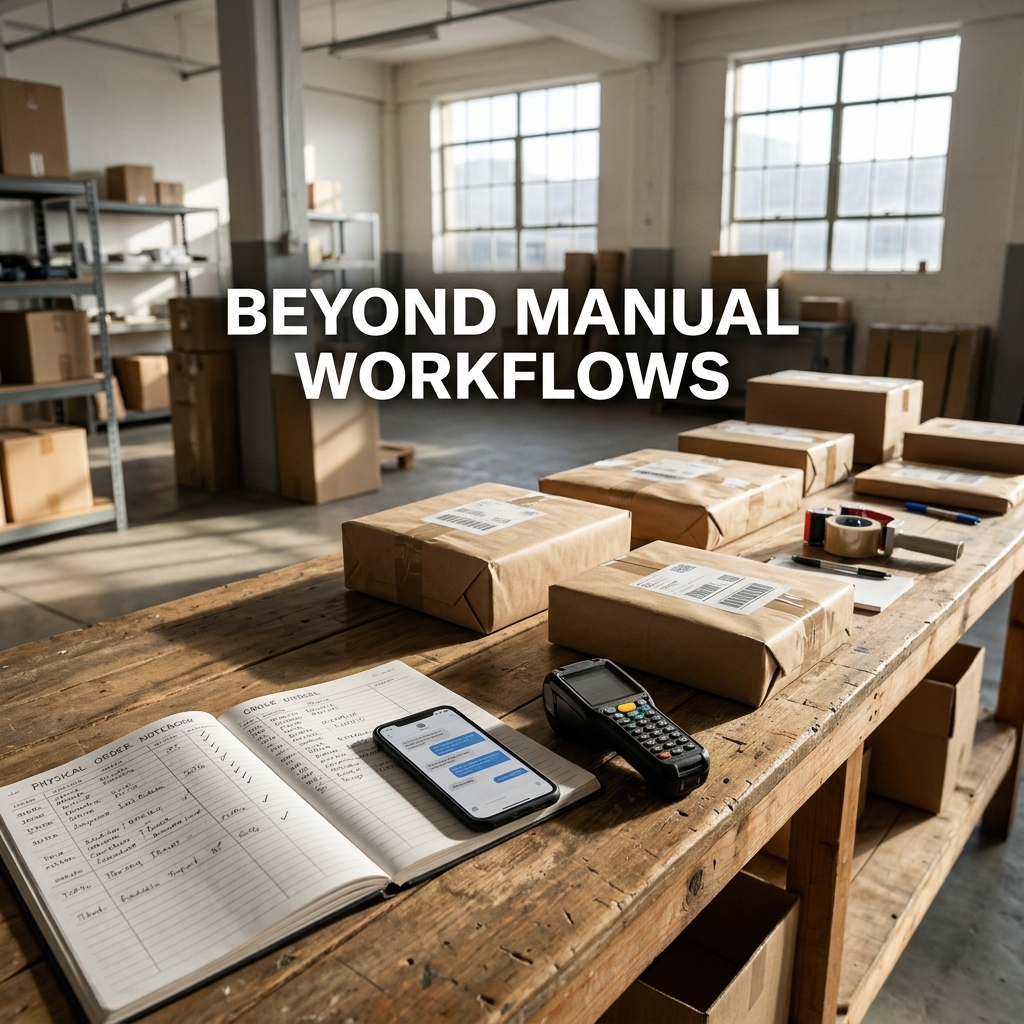
Manual publishing workflows drain commercial teams because copying product updates, price changes, and customer order intake across multiple channels creates constant administrative friction. Teams waste hours retyping data instead of fulfilling purchases. Replacing disjointed manual updates with an integrated intake system eliminates data discrepancies and captures buyer requests immediately across every sales channel.
Why fragmented catalog distribution creates administrative debt
Businesses selling across social feeds, direct chat apps, and digital storefronts rarely operate from a single, unified database. Instead, an operator posts an item with photos and specifications to Facebook, copies the description into WhatsApp broadcast lists, and manually edits the stock count on a website dashboard.
This process splits your catalog into isolated silos. When an item sells out or prices change, an operator must retrace those steps across every platform. If one channel gets missed, customers read outdated specifications and place requests for stock that no longer exists. The failure does not stem from careless employees. It happens because human operators are forced to act as the communication bridge between disconnected software platforms.
The hidden cost of manual publishing workflows in customer communication
The immediate consequence of manual publishing workflows is the lag between item discovery and transaction confirmation. When product availability, color options, and pricing are maintained by hand across chats and feeds, the customer inquiry process becomes prolonged.
Buyers send direct messages asking basic questions: Is this still available? What sizes remain? What does delivery cost? When staff members spend forty minutes each morning answering identical questions by consulting handwritten notebooks or static spreadsheets, response times stretch. In chat commerce, delayed replies lead directly to abandoned purchases. Customers message two competing sellers at once; the seller who answers first with accurate details secures the transaction.
How data re-entry erodes order accuracy and team capacity
Every manual workflow introduces a secondary transcription stage. Once a buyer commits inside a messaging thread, an employee must retype their name, shipping address, contact phone number, and chosen product variations into an internal ledger.
This manual data entry introduces persistent friction points:
• Delivery errors caused by mistyped phone numbers or incomplete street addresses.
• Inventory discrepancies when an item marked as sold in a spreadsheet is offered to another customer in WhatsApp.
• Lost customer history, where returning buyers are treated as complete strangers because their previous preferences remain buried in old chat archives.
• Operational bottlenecks during sales peaks, where hiring more chat agents increases coordination chaos rather than clearing the order queue.
The compounding overhead of re-entering customer information steals operational focus from inventory sourcing, packaging quality, and retention marketing.
Steps to unify inventory publishing and order intake
Transitioning away from fragmented, manual workflows requires establishing a single operational source of truth and automating intake at the point of customer contact.
First, audit every touchpoint where product specifications and stock states are displayed. Identify which channels drive actual purchase intent versus passive awareness. If eighty percent of completed transactions originate in direct chat conversations, prioritize centralizing those chat environments before restructuring secondary platforms.
Second, standardize your product catalog data structure. Ensure titles, variants, and pricing conventions use identical naming standards across all channels. When data formats match, conversational systems can read from one central list rather than requiring custom reference notes for separate channels.
Third, connect customer intake directly to your inventory records. Instead of letting conversational inquiries pile up in unorganized inboxes, direct conversations into an environment that recognizes product queries, verifies current pricing, and converts buyer details directly into an order record without retyping.
Signals that prove your workflow transition is working
You can track the operational recovery of your team through two concrete metrics:
First, monitor order processing cycle time. Measure the minutes elapsed from a customer’s initial sizing or availability question to the final creation of a confirmed shipping record. A stable workflow cuts this interval down to mere minutes by eliminating spreadsheet cross-checking.
Second, track customer record completeness. When your operations run properly, every returning buyer’s phone number links directly to their past order history and delivery notes without manual intervention from an agent.
When manual catalog publishing remains appropriate
Automating your catalog distribution and order desk is not necessary for every business model. Operations that manufacture completely bespoke, one-off artisan goods or handle fewer than five custom inquiries a week gain little advantage from automated workflows. In high-touch consultative engagements where pricing is negotiated uniquely for each contract, manual communication remains the preferred approach.
For businesses managing regular product rotations and daily order volume across chat, OrderPilot provides a unified workspace that connects your chat channels to an automated order desk and customer record system.
Removing manual transcription from your daily routine preserves staff attention for fulfillment accuracy and customer retention.
#EcommerceOperations #WorkflowAutomation #OrderManagement

Leave a Reply